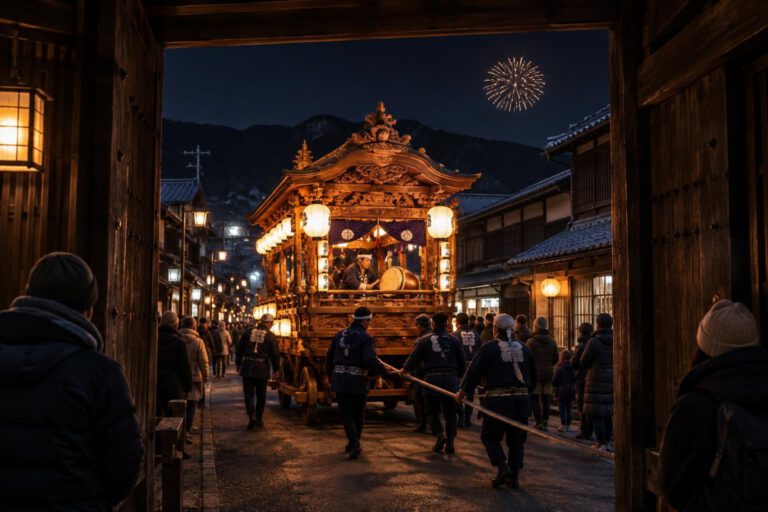
On 5 and 6 December, the Gastein Valley gets loud: bells clang, and masked figures appear in the streets and outside houses. These Krampusse are not simply invented figures of terror. They are part of a local tradition in which St Nicholas, Krampus and the people they visit all play a part.
Anyone watching on these evenings is a guest at a tradition whose proceedings are shaped by the Passen and the families they visit. An event at Schachengut in Bad Gastein has been announced for Saturday, 5 December 2026, from 3pm. Alongside it are the traditional encounters throughout the valley.
A Pass Is More Than a Group of Masked Figures
In the Gastein Valley, a Krampus group is called a Pass. It usually includes St Nicholas, a Körblträger and several Krampusse; some Passen also include an angel. St Nicholas carries the book and holds the scene together, while the Krampusse, with their fur, horns and heavy bells, provide his wild counterparts. Their relationship is part of the performance: Krampus does not appear independently of St Nicholas, but within a shared group.
The masks are distinctive examples of craftsmanship. According to the Salzburger Landesinstitut für Volkskunde, the Gastein heads are often carved from Swiss stone pine; horns from billy goats or rams give them their individual shapes. The differences between Passen are intentional: their names, equipment and performances reflect specific places and the histories their groups have developed over time.
House Visits Rather Than Spectator Stands
In many places, the St Nicholas’s Day tradition is not a procession along a cordoned-off route. Passen move through villages and towns, visiting families. Inside the house or at the door, the performance unfolds between St Nicholas, Krampus and those they visit. This distinguishes it from a show in which the audience stands on one side and the performers on the other.
Folklore documentation places Gastein’s Krampus tradition within a long and eventful history: inherited forms were banned or interrupted at times, then later revived. The tradition has also had a public presence since the 19th century; today, numerous Passen keep it alive. The exact number of groups can change. No definitive total confirmed for 2026 is available here.
Describing it as an “ancient” tradition also requires care. What is regarded as tradition today consists of inherited forms and changes made over generations. The figure of Krampus, the allocation of roles and the nature of the performances are shaped by regional practices. In the Gastein Valley, this distinctive character is particularly evident in the house visits and the relationships between the groups and the people who welcome them.
Watching with Distance and Consideration
For visitors, restraint is a good starting point: do not block routes, follow the Pass’s instructions and do not push children into the scene without asking. Masks, bells and switches are part of the performance; anyone uncomfortable being close to the action can keep their distance or move elsewhere. Photography should not interrupt the encounter. Private house visits, in particular, are not an invitation to enter courtyards or homes without permission.
The event at Schachengut offers a specific date on which to experience the tradition; its format does not replace the variety of encounters across the valley. Anyone hoping to see a particular Pass should follow local event information and respect the setting concerned. Not every group performs in public.
Plan Your Return Journey Too
It gets dark early in December. Anyone travelling between villages and towns should arrange their outward and return journeys in advance and ask their accommodation about suitable connections. Buses and trains link places in the Gastein Valley, but timetables and seasonal services can vary. For 5 and 6 December 2026, check the specific return services for wherever you are staying; do not assume there will be a connection. If walking, stay on public paths and wear clothing that is clearly visible in the dark.
The appeal of these nights does not lie in getting as close as possible to a mask. It comes from the interplay of craftsmanship, roles and local heritage. Those who recognise this interplay and give local people space encounter Krampus as part of December in Gastein – not merely as a noisy spectacle.
Original reviewed by the editors · 20 November 2026