Anyone wishing to spend several weeks or months in Thailand over winter should check how long they can stay before booking. Since 15 September 2026, German nationals entering without a visa have initially been allowed to stay for a maximum of 30 days. The previous allowance of up to 60 days without a visa no longer applies to new arrivals.
Three separate things matter: entry without a visa obtained in advance, the length of stay granted by the border officer on arrival, and a possible extension once in the country. For longer trips, your dates therefore need to match your chosen basis for entry.
Step 1: plan the first 30 days
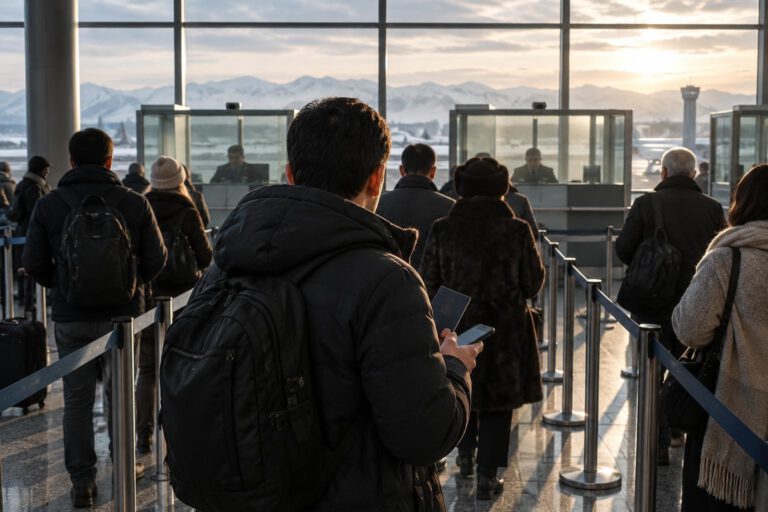
German nationals generally do not need to obtain a visa before entering for a tourist stay. Since 15 September 2026, Thai immigration has initially granted a maximum of 30 days for visa-free entry. The length of stay is determined on arrival; the entry in your passport is what counts. The visa exemption applies to tourism. According to the Federal Foreign Office, anyone unable to provide proof of onward or return travel in the form of a flight, bus or train ticket needs a visa.
The Thailand Digital Arrival Card also needs to be part of your pre-departure planning: foreign travellers must complete it online, no earlier than three days before arrival. The Federal Foreign Office also notes that proof of sufficient funds may be required: 20,000 Baht per person or 40,000 Baht per family, or the equivalent in another currency.
Step 2: do not count on an extension
You can apply to the relevant immigration office for a one-off extension of your visa-free stay by a maximum of a further 30 days. The application must be submitted before your permitted stay expires. The Thai embassy explicitly states that granting an extension is a decision for the immigration authorities. For travel planning, this means that the extra days are a possibility, not an automatic entitlement.
Anyone wishing to stay for up to 60 days can apply for an extension locally. Those wanting to stay longer should look into a suitable visa before travelling. According to the Federal Foreign Office, a tourist visa obtained from a Thai diplomatic mission before entry generally permits a stay of up to 60 days. Check the visa type, requirements and application process with the relevant Thai mission.
Visa-free entry by land or sea is possible no more than twice per calendar year. Immigration officials may also ask questions about the purpose of your trip if you make repeated tourist visits; if they have doubts, they can refuse entry. Anyone repeatedly entering and leaving the country should therefore not rely on a border crossing as a dependable way to extend their stay.
Step 3: take the deadline in your passport seriously
Make a note of the date until which your entry stamp permits you to stay. An extension must be applied for before that date. Anyone who overstays risks fines, imprisonment, deportation and a possible ban on re-entry. For overstays of up to 40 days, the Federal Foreign Office currently lists a fine of 500 Baht for each additional day, up to a maximum of 20,000 Baht. These details may also change.
A valid travel document is another part of your preparations: your passport must be valid for at least six months on arrival. Entry rules can change at short notice. Shortly before departure, check the latest advice from the Federal Foreign Office and the information provided by the Thai mission.
Partial travel warning: identify the affected areas
The partial travel warning is separate from the length of your stay. The Federal Foreign Office’s travel and security advice warns against travel within 20 kilometres of the border with Cambodia. Travel to the provinces of Narathiwat, Yala and Pattani, as well as the districts of Chana, Na Thawi, Thepha and Saba Yoi in Songkhla province, is strongly discouraged. This does not amount to a blanket warning against travel to the whole of Thailand. Check the current situation before excursions and journeys between destinations, particularly in border regions.
At a glance
Since 15 September 2026, the initial visa-free stay has been limited to a maximum of 30 days. A one-off extension of up to 30 days must be applied for at the immigration office before the permitted stay expires and is granted at its discretion. For longer trips, look into a suitable visa in advance. Your entry stamp, passport validity and the latest security advice all need to be part of your travel planning.
Original reviewed by the editors · 17 November 2026