In early winter, the Hessian Rhön does not feel like a setting that needs snow to be complete. Its open uplands, dark stretches of bog and widely scattered villages tell the story of a landscape shaped by farming over centuries. Those who come here to spend time outdoors need not plan a day of winter sports: a visit to a bog, a walk along marked paths and a stop for a meal can fill the day – even if the slopes remain green or grey.
A landscape shaped by pasture and open space
The Rhön extends across Hesse, Thuringia and Bavaria; its Hessian section belongs to the Rhön UNESCO Biosphere Reserve and the Hessische Rhön Nature Park. Here, sweeping views are closely linked to the way the land is used. According to Hessen Tourismus, flocks of sheep kept the land open; Rhön sheep remain a familiar sight in the pastures today. There are also raised bogs, upland meadows and the rounded summits of a low mountain range whose open landscape affords far-reaching views in many places.
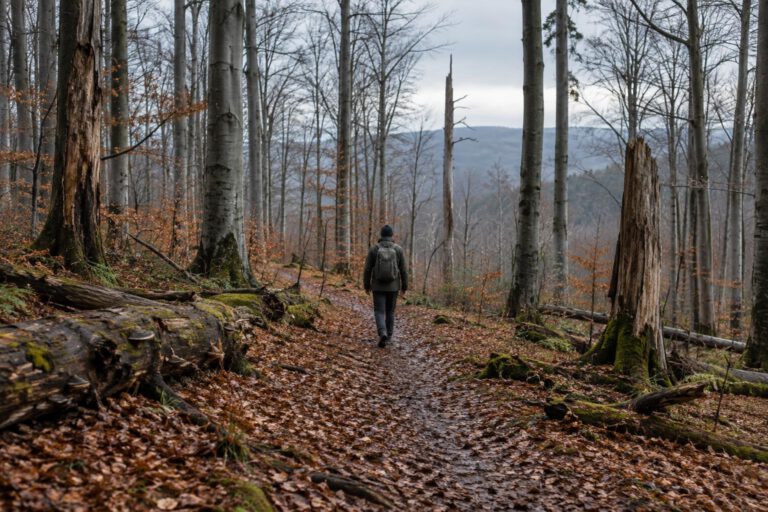
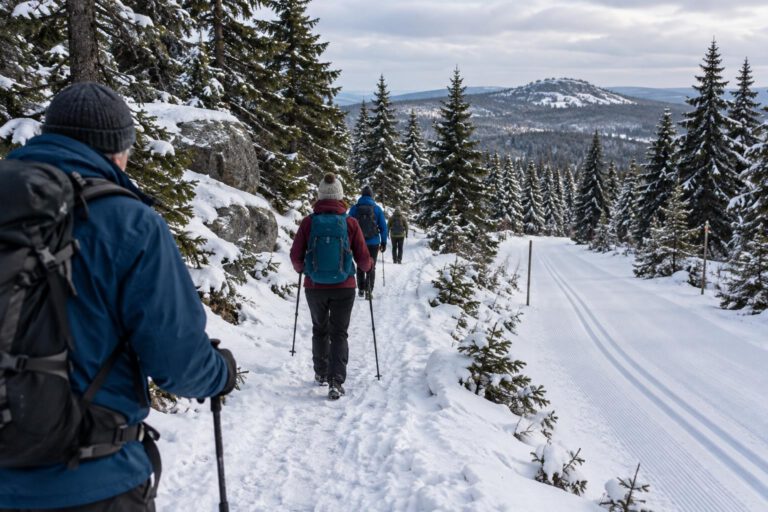
The biosphere reserve embodies the coexistence of nature conservation and human activity. In early winter, this relationship takes on a more understated form: fewer flowers and less grazing activity, but clear outlines of ridges, patches of woodland and settlements. The season suits travellers who like to take in a landscape without a packed itinerary. Anyone primarily looking for groomed pistes and reliable days of snow is better off planning around current conditions rather than fixed expectations.
Bog paths rather than piste maps
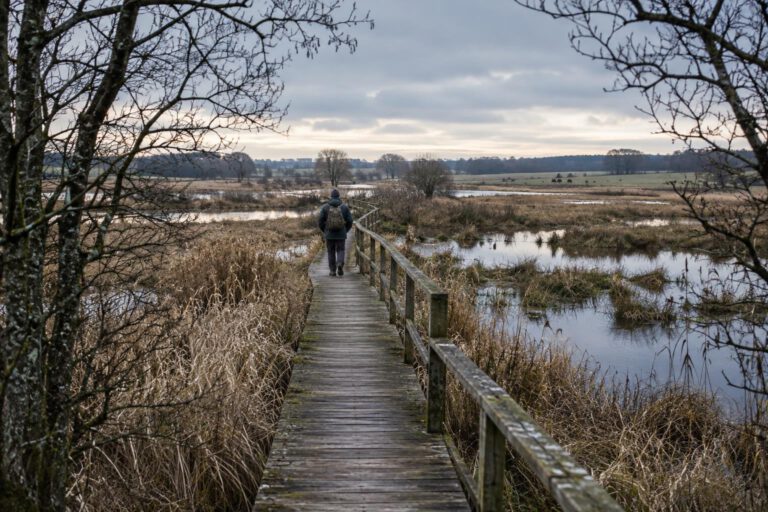
One destination is the Rotes Moor near Gersfeld. A boardwalk leads through the sensitive bog habitat; there is a visitor centre at the NABU-Haus am Roten Moor. The route makes this habitat accessible without visitors having to step onto the bog itself. Keeping to marked paths protects the ground and plant life.
A short outing can be combined with a stop for a meal, provided the centre is open. The Hessian Rhön also offers regional produce and a cuisine rooted in what the surrounding landscape provides. Check opening hours and seasonal offerings before setting off. For a day trip, it is worth resisting the temptation to cram too many destinations into a visit to the bog: start with the boardwalk and the information available on site, then take a break somewhere nearby.
Getting there by train and bus
Gersfeld is the terminus of the RB52 from Fulda. RMV publishes a timetable for this service; from there, you can plan further outings into the region. Bus services, however, cannot all be relied upon year-round: according to RMV, the RhönRadBus runs seasonally from May to early October. The Kreuzbergbus is also listed as a seasonal service. For a winter visit, therefore, check the specific connections to your destination and back – particularly if your day is to begin at a remote starting point.
At a glance
- Best time to visit: Early winter for quiet days in the landscape; snow should not be taken for granted.
- Getting there: Take the RB52 from Fulda to Gersfeld; check onward bus connections and seasonal operating dates in advance.
- Highlights: Open uplands, pastures grazed by Rhön sheep and the Rotes Moor.
- Tip for a day trip: Combine the boardwalk and visitor centre at the Rotes Moor with a stop for a meal nearby; check opening hours in advance.
- Hessen Tourismus and Rhön GmbH.
Original reviewed by the editors · 11 November 2026