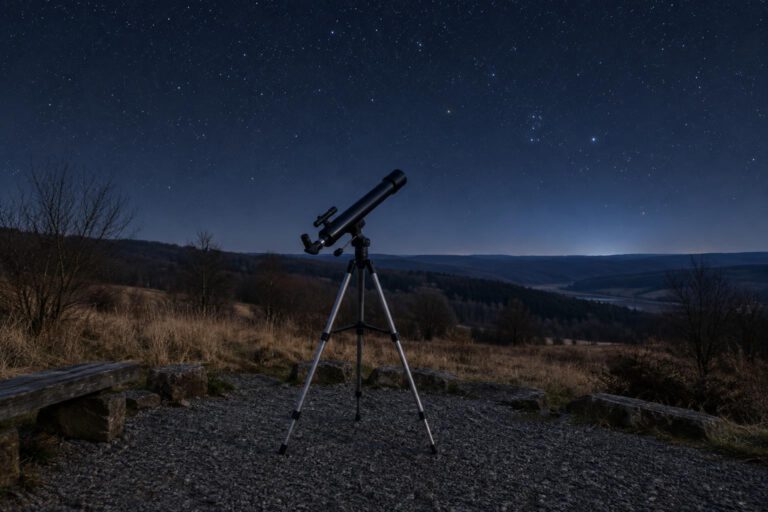
The first glance after sunset is often upwards: on clear nights, a star-filled sky appears above the Eifel that is now barely visible in brightly lit urban areas. Since 2014, Eifel National Park has been recognised as an International Dark Sky Park. The designation marks it out as a travel destination – and sets a task: preserving natural darkness.
For night-time here is also a habitat. Many animals depend on darkness; artificial light and disturbance at night can disrupt their rest and orientation. This sets a clear limit on night-time tourism: the sky is there to be experienced, but the national park is not a night-time adventure park.
The sky as something to protect
Light pollution means artificial light that brightens the night sky or spills into the surrounding environment. It reduces the visibility of stars and can have ecological consequences. The Nordeifel Nature Park describes how outdoor lighting attracts nocturnal insects, interfering with natural processes. Undisturbed darkness and quiet matter for other animals too.
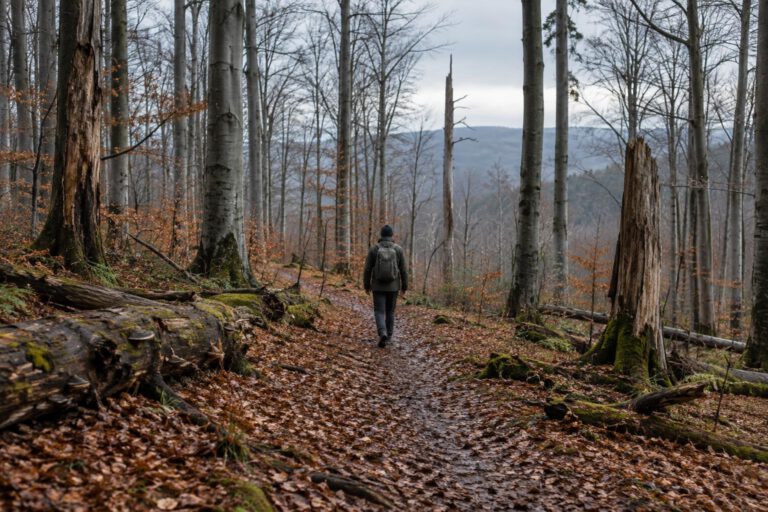
The Dark Sky Park therefore combines visitor management with education. The national park explicitly points out that the night remains reserved for animals. Particularly in winter, when wildlife is more sensitive to disturbance, the park administration asks visitors to avoid walks at twilight and at night. The requirement to keep to paths still applies: within the protected area, visitors must stay on marked paths and observe the posted rules.
Stargazing in designated places
Anyone wishing to see the stars will find designated SternenBlicke around the national park. These observation points are in suitable locations outside the national park or other protected areas; information boards and seating identify them as established places to visit. This is about more than convenience: when visitors stay at designated spots, they can enjoy the sky while placing less additional pressure on sensitive habitats.
Guided activities offer another option. Trained SternenGuides (stargazing guides) take groups to selected locations, explaining both the sky and the importance of the natural night. The astronomy workshop “Sterne ohne Grenzen” runs observation sessions at the observatory at Internationaler Platz Vogelsang IP. The events calendar lists several dates for November and December 2026; many are marked as fully booked. Check dates, booking availability and any weather-related changes with the organiser.
Plan your journey there – and back
According to the national park administration, Kall and Heimbach can be reached by train; buses connect the stations with locations in and around the protected area. Internationaler Platz Vogelsang IP is also served by buses. For an evening event, however, planning the outward journey alone is not enough: the return journey depends on the day of the week, the season and the specific venue. Timetables and the last connection must be checked in advance. Those finishing late can plan an overnight stay in the region.
The Eifel shows that nature tourism and protecting the night can go hand in hand, provided the experience is confined to suitable places and times. The starry sky is a reason to visit the region; the darkness that makes it visible is also a resource that visitors should not use up. Those who use the designated sites and respect the areas set aside for night-time peace see more than stars: they also see the boundary that a protected area sets.
Original reviewed by the editors · 11 November 2026