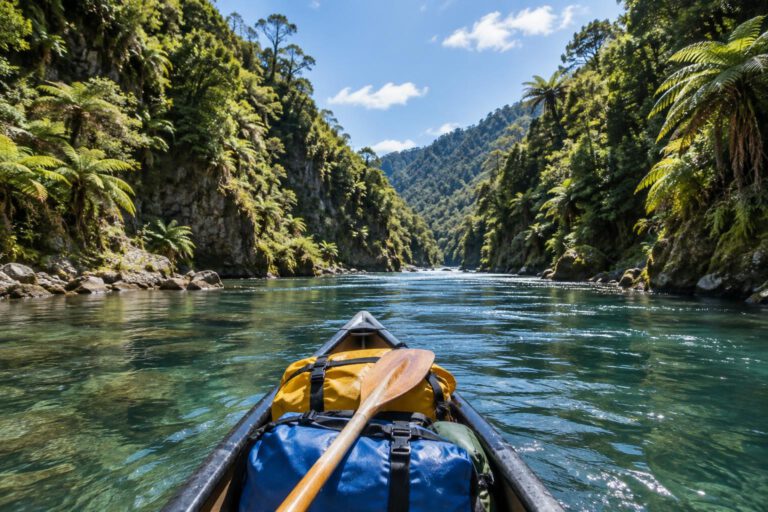
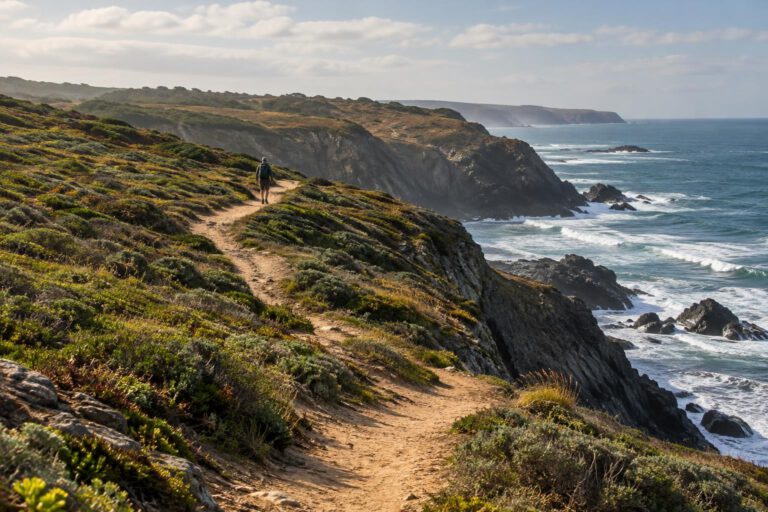
Planning for the Milford Track starts not at the trailhead, but with three questions: Are the huts available for all three nights? Do the boat and bus connections fit? And can you safely undertake a long, weather-dependent multi-day hike with your current fitness and equipment? Only when these elements line up can a wish to visit Fiordland become a workable travel plan.
The track runs for 53.5 kilometres in one direction through Fiordland National Park. The 2026/27 Great Walks season runs from 1 November 2026 to 30 April 2027; the last departure is on 28 April. DOC notes that weather or closures may nevertheless affect the itinerary. Information correct as of 21 November 2026.
1. Secure all three nights first
The Milford Track is walked in one direction over four days and three nights. Independent walkers stay at the DOC huts Clinton, Mintaro and Dumpling, in that order. Camping is not permitted on the track. During the season, huts must be booked in advance; according to DOC, anyone without a valid booking may face a charge or be turned away if the hut is full. Booking is therefore not a formality, but the first step in planning.
For international adults, the DOC hut fee for the 2026/27 season is 152 New Zealand dollars per person per night, as of 21 November 2026. That amounts to 456 dollars for three nights, before transfers, food and other travel expenses. Prices and availability may change.
The huts have mattresses, toilets, heating, basic cooking facilities, solar lighting and cold running water. There is no cookware or showers. Independent walkers bring their own food and equipment. Guided trips are organised differently: operators may package accommodation, meals and transfers together; what is included varies between trips.
2. Book transfers as part of the route
The starting point is Glade Wharf on Lake Te Anau. From Te Anau, you first travel to Te Anau Downs, then take a boat to the wharf. At the end, another boat takes you from Sandfly Point to Milford Sound/Piopiotahi; from there, buses run to destinations including Te Anau and onwards to Queenstown. There is no road access to either end of the track, and transfers also need to be arranged in advance.
Coordinate your hut booking, boat times and bus connection. The final walking day is particularly important here: according to DOC, it is 18 kilometres from Dumpling Hut to Sandfly Point, where you need to catch the early-afternoon ferry. Do not schedule your onward journey so tightly that a delay caused by weather or trail conditions immediately puts the entire chain of connections at risk.
3. Assess the stages honestly against your fitness
The first stage, from Glade Wharf to Clinton Hut, is comparatively short at five kilometres. Day two covers 17.5 kilometres to Mintaro Hut, and day three 13 kilometres to Dumpling. On the third day, the trail climbs to Omanui/McKinnon Pass at 1,154 metres before descending steeply. The final stretch is long and ends with the boat connection.
DOC describes parts of the trail as steep, slippery, rough and muddy, and does not recommend the walk for children under ten. These key facts call for preparation for several consecutive days of walking, not just a single hike to a summit. If you are unsure about long distances, steep descents or changing terrain, consider before booking whether a guided trip or a different walk would suit you better.
4. Factor in equipment and weather
Cold, strong winds, snow and heavy rain can occur even during the Great Walks season. DOC highlights Fiordland’s very high rainfall and warns of possible track closures. Pack clothing suited to changeable, wet weather, sturdy walking boots, food for every day and your own sleeping kit. As there is no mobile reception along the way, a phone is not a reliable emergency plan.
Outside the Great Walks season, conditions change fundamentally: huts have fewer facilities, bridges over some side streams are removed, and DOC does not manage flooding and avalanches as it does during the season. DOC restricts this period to fit, experienced and well-equipped walkers. It is not an easy way to get around a fully booked season.
At a glance
For the 2026/27 season, first check availability and book all three nights in DOC huts, then secure boat and bus connections to match. The route is a four-day, one-way hike with a demanding pass crossing, a long final day and the possibility of bad weather. Equipment, fitness and a time buffer for the return journey all need to inform the same decision.
Original reviewed by the editors · 21 November 2026