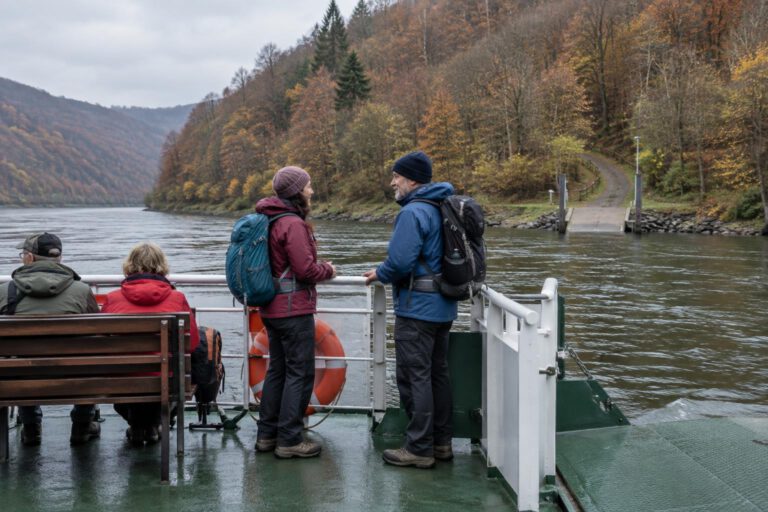
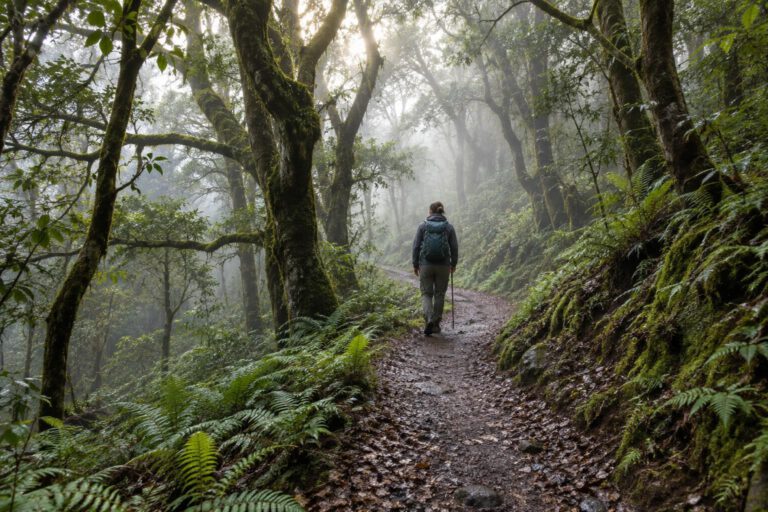
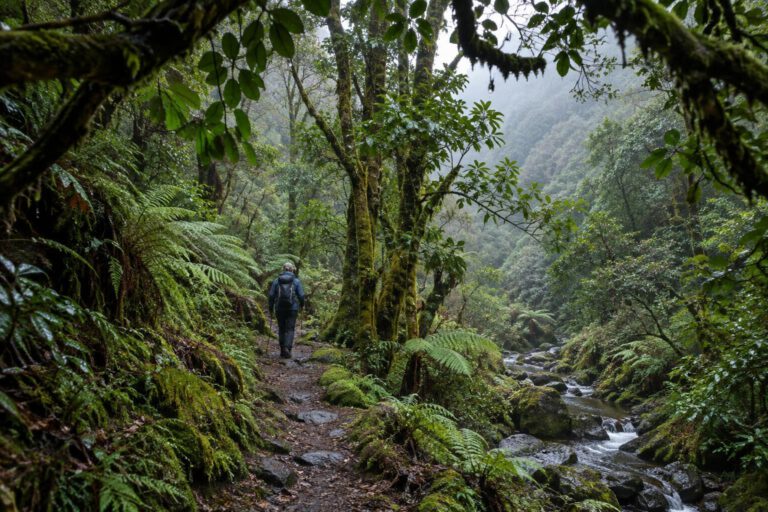
If you are setting out on foot or by bike in the Algarve, choose the landscape first and the length of each stage second. The rugged cliffs in the west, the hilly hinterland and the flatter coastal and river landscapes call for different routes. Turismo de Portugal recommends September to June for walking and cycling; weather and trail conditions remain decisive for any particular outing.
Cliffs: walking the Fishermen’s Trail
The Trilho dos Pescadores, Rota Vicentina’s Fishermen’s Trail, follows sandy coastal paths close to the cliffs along the Costa Vicentina. The trail operator classifies it as a walking route and advises against cycling it: narrow, sandy passages and the fragile natural environment make it unsuitable for bikes. The cliffs are vulnerable to erosion; staying on the marked trail protects both people and the landscape.
Those who want to cycle will find a separate network of mountain bike and gravel routes within Rota Vicentina. According to the operator, some sections are shared with walkers or motor traffic. Directional requirements, signage and hazard warnings therefore need to be considered when planning. The names “Rota Vicentina” and “Fishermen’s Trail” do not automatically denote a route equally suited to both ways of getting around.
Hinterland: the Via Algarviana for walkers
The Via Algarviana runs for around 300 kilometres through the interior from Alcoutim to Cabo de São Vicente. Portuguese Trails describes the long-distance route as a Grande Rota (long-distance trail) for walkers: it passes through rural areas and uplands, including the Serra do Caldeirão and the Serra de Monchique. Each of its 14 sections ends in a town or village; depending on the stage, accommodation and places to eat can be found there.
The Via Algarviana is therefore not necessarily the right choice for a cycling trip through the hinterland. Portuguese Trails also lists cycling options for the region, including the Grande Rota do Guadiana. Check the specific classification of individual stages and their suitability for your type of bike on the relevant route page, rather than assuming a long-distance route is rideable from its name alone.
River and coast: Guadiana or Ecovia
The Grande Rota do Guadiana links Alcoutim in the north with Vila Real de Santo António in the south. Portuguese Trails describes it as a route of around 65 kilometres through river landscapes, hinterland and coastal areas, and lists separate walking and cycling options. This makes it a possible choice for a trip combining both activities – provided you check the relevant version carefully.
According to Portuguese Trails, the Ecovia do Litoral runs for around 214 kilometres between Vila Real de Santo António and Cabo de São Vicente. It is primarily a cycle route along the south coast, passing towns and natural areas such as Ria Formosa Natural Park. The route consists of sections for non-motorised vehicles as well as shared roads and paths. Walkers should therefore check the particular section rather than expect a car-free footpath throughout.
Planning access and stages by train
The Linha do Algarve connects Lagos, Faro and Vila Real de Santo António. The regional timetable published by CP has been in effect since 14 December 2025; stations along the line can serve as starting or finishing points for coastal stages. However, the railway does not necessarily provide access to remote starting points in the hinterland. For a particular walk or cycle ride, first decide where to start and finish, then check the connections and return journey. Check timetables again before travelling; taking a bike on the train must also be planned in line with the transport operator’s current conditions.
At a glance
Clifftop paths such as the Fishermen’s Trail are intended for walkers. The Via Algarviana runs through the rural hinterland; the Ecovia is a coastal cycle route with mixed traffic in places. The Grande Rota do Guadiana is an option for river landscapes and more than one way of getting around. The Algarve railway connects the coastal towns of Lagos, Faro and Vila Real de Santo António.
Original reviewed by the editors · 15 November 2026