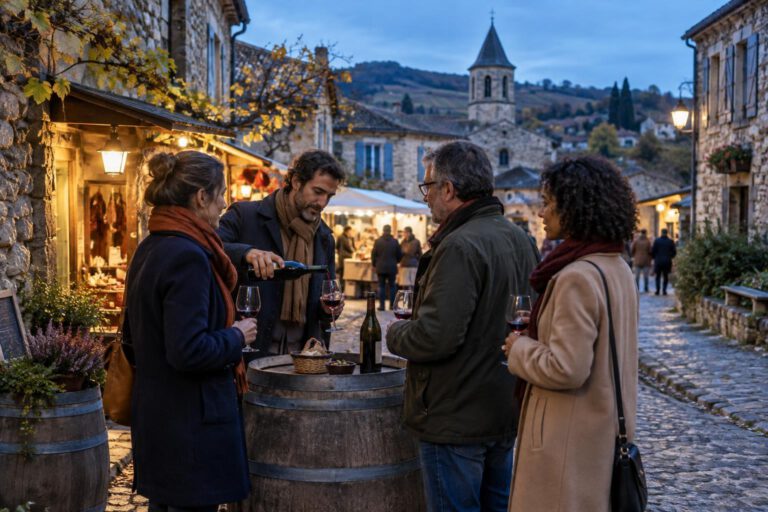
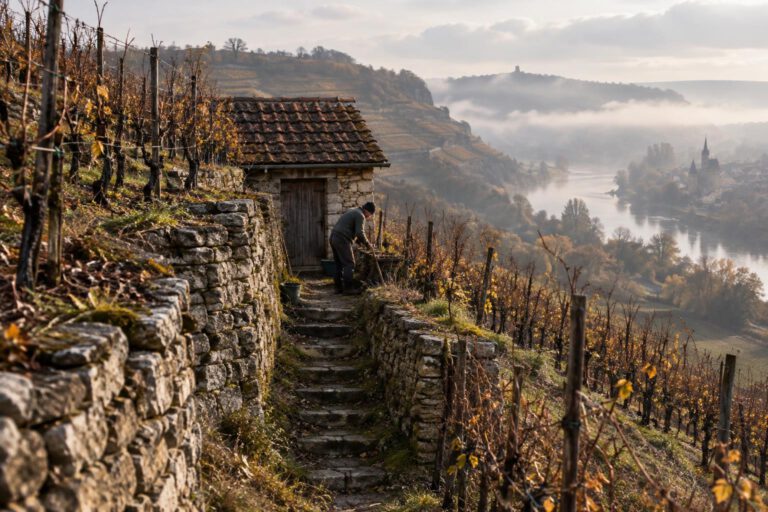
In late autumn, the wine region of Brda enters a different season. The orchards have been harvested, and ingredients that keep well and hearty dishes take on greater importance in the kitchen. From 20 to 29 November 2026, Game Days and Vintage Wines puts game dishes and mature wines centre stage. For ten days, menus featuring roe deer, red deer, wild boar or pheasant will be paired with forest fruits, chestnuts and porcini mushrooms. The announced wine pairings come from the winegrowers’ own reserves.
This seasonal interplay is more than a theme for a menu. It offers a glimpse into a landscape where winegrowing, orchards and the laying down of provisions exist side by side – and into a cuisine that brings the changing seasons to the plate.
A cuisine shaped by provisions and seasons
Brda lies in western Slovenia, between the Alps and the Adriatic coast. The hilly region is known for its wine and fruit, but in autumn other harvests and provisions come to the fore. Chestnuts are gathered in Gornja Brda, roasted or made into stews and pasta. Traditionally, they are also served with young wine. In farmhouse cooking, they played a dual role: fresh produce for the season, and dried or stored provisions for later.
Old methods of preparation also tell a story of frugal cooking. Regional records describe winter stews made with barley, beans, turnips and chestnuts. Meat was often used in soups, braised dishes or sausages. Krodegini and Markandele, traditional sausages made from pork and offal respectively, represent a cuisine in which as many parts of the animal as possible were used. This is not the same as today’s game cooking, but it shows how closely food, seasons and provisions were connected in the region.
Mature Rebula, young landscape
Brda is also a wine region with its own history of grape varieties. Rebula is considered an old local variety and, according to the regional tourist information service, is attracting renewed attention. It grows on marl, flysch and stony soils; the national winegrowing information service also notes the influence of cooler air from the Alps and warmer air from the Adriatic on Goriška Brda. The variety is used for both fresh wines and wines aged for longer.
The November event is explicitly devoted to mature bottles from the winegrowers’ cellars. Pairing game and wine in this way is not a fixed regional rule, but an opportunity to taste the differences: richly flavoured meat and savoury sauces call for a different accompaniment from a lighter dish with mushrooms or chestnuts. Which wines are actually served with each menu depends on the individual establishment.
A food and wine trip that takes planning
The event is spread across several participating establishments; there is no single venue. The Slovenian Tourist Board lists a fixed price of 35 euros for the special menus, excluding wine pairings. Anyone wishing to visit several stops should factor the journeys between places into their plans. Brda is a rural landscape of rolling hills, and an evening enjoying food and wine makes driving back an unsuitable option.
A timetable published by the municipality lists a route from Nova Gorica to Šmartno v Brdih and, according to the document, is valid until 30 June 2029. The listed service runs on weekdays except Saturdays, seasonally from 1 September to 24 June. This makes the bus a possible way to get there on certain days, but not a blanket solution for every venue and return journey. Before travelling, check current departure times and connections to the venue where you have booked your menu.
This is precisely the appeal of Brda’s November cuisine: it brings together produce from forest, field and cellar, making clear that the pleasures of food and wine here remain rooted in specific places and seasons. Those who take their time will discover behind a game dish not just a wine list, but also a tradition of cooking from stored provisions, an autumn chestnut harvest and the long labour on the hillsides.
Original reviewed by the editors · 17 November 2026