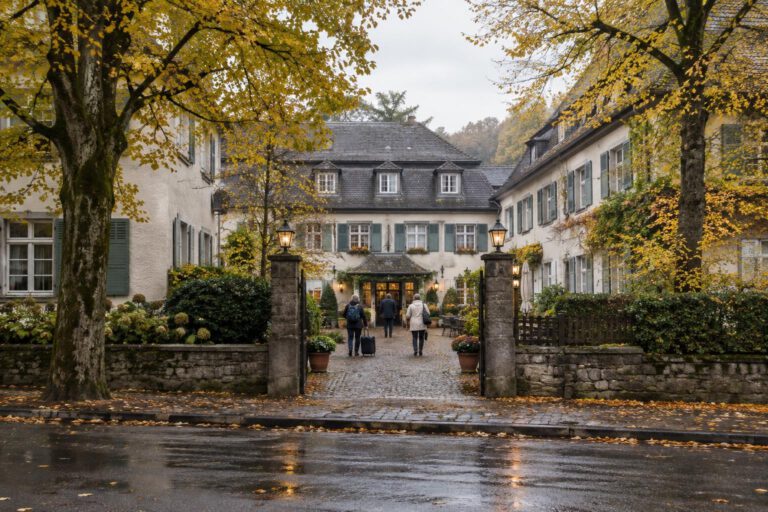
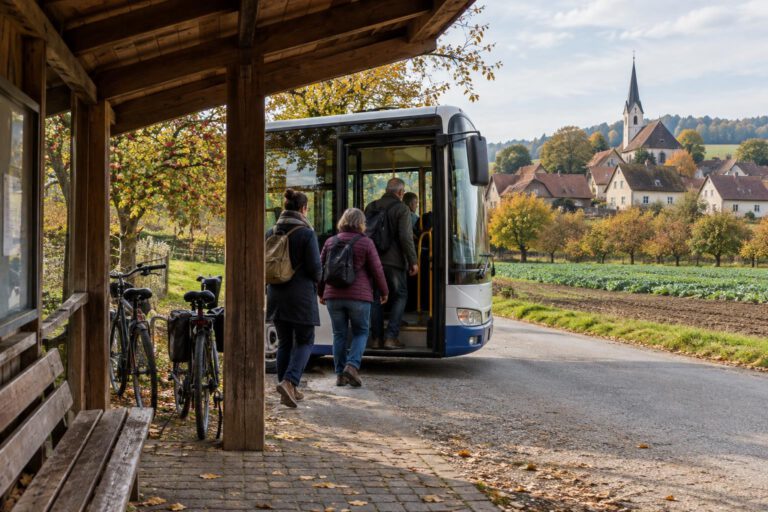
From January to September 2026, accommodation establishments in Germany recorded 389.8 million overnight stays. That was 0.6 per cent more than in the previous record period a year earlier. September alone saw 48.9 million overnight stays, 0.8 per cent more than in September 2025. The Federal Statistical Office published the provisional figures on 11 November.
The record describes a nationwide trend. What it tells us, first and foremost, is that more nights were booked in the accommodation covered by the survey. Where this led to more crowding – and whether demand became more spread out over time – cannot be gleaned from this total.
What the figure counts
The official monthly survey records arrivals and overnight stays by month, region and guests’ place of origin, as well as the sleeping capacity available. It includes hotels, guesthouses, holiday accommodation, campsites and other tourism-related establishments, provided they have at least ten bed spaces or ten pitches. Smaller establishments are not included in the survey, as the statistical portal of Germany’s federal states explains.
An overnight stay is a night booked or reported at an establishment, not a count of everyone spending time in a place during the day. Day visitors, excursionists and visitors to individual attractions represent a different form of demand. Nor does the nationwide total reveal whether overnight stays are spread across many regions or concentrated in just a few places.
Even a record figure over nine months does not demonstrate a shift towards the low season. Establishing that would require comparing monthly figures over several years – ideally for individual tourist areas and alongside their bed capacity. An increase over the period as a whole can coincide with rises in some months and falls in others.
From growth to pressure?
More overnight stays do not necessarily mean overtourism. The term describes a situation in which visitor pressure adversely affects local quality of life, access to public spaces, or nature and cultural heritage. Alongside visitor numbers, the key factors are when and where people gather and what capacity a place has.
Additional demand can have a different impact in a city than in a village, on a beach or on a sensitive walking trail. Bottlenecks in local public transport, full car parks, disruption for residents or pressure on water resources and nature cannot be identified from overnight stay figures alone. They require local data and observation. The German Environment Agency accordingly treats measuring sustainability in tourism as a broader task than simply counting visitors.
A robust assessment would therefore require figures at a more local level: overnight stays by month and subregion, bed occupancy and available capacity, supplemented by day visits and peak hours at particularly busy locations. These would need to be combined with information from transport, waste and water management, nature conservation and local authorities, as well as feedback from residents. Only when considered together do these reveal whether high demand is also causing specific bottlenecks.
What the record leaves unanswered
The provisional national figure is a useful economic indicator for the accommodation sector and a measure of recorded demand. It is not a situation report for every holiday destination. For travellers, the crucial question therefore often remains local: how are visitor flows spread across the day and the season, and are transport, accommodation and public infrastructure sufficient to cope?
The answer can vary from place to place. A rising annual figure can mean additional revenue for businesses, while particular sites or paths are under intense pressure at the same time. Whether that is the case must be checked against local data. The record reported in November shows the growth – it does not map the pressure.
Original reviewed by the editors · 14 November 2026