A longer winter stay on Tenerife’s coast is easily combined with days in the mountains. But the mild season by the sea is no reliable guide to conditions on Teide: the national park extends into high-mountain terrain, where weather and temperatures can change rapidly. Anyone driving up from the coast therefore needs to plan for two very different climates in a single day.
Since 15 October 2026, there has been an additional organisational step. Tenerife’s Cabildo has added three more trails to its reservation and access system. For the winter-stay season now beginning, booking is therefore part of the preparation for more hikes than before.
Three trails with limited daily quotas
The trails affected are PNT 09 Teide–Pico Viejo–Mirador de Las Narices del Teide, PNT 23 Los Regatones Negros and PNT 28 Chafarí. According to the Cabildo, walkers need an advance permit through the Tenerife ON platform. A total of 225 places per day are available across the three routes: 150 for individual visitors and 75 for accredited professionals. Under the decision, reservations for these newly regulated trails are not subject to the charges that apply to other routes already regulated.
The rules pursue two aims that are closely linked on Teide: managing visitor flows and improving safety on challenging mountain trails. A quota can limit crowds, but it is no substitute for suitable equipment or checking conditions on the day. In adverse weather, trails may be closed in full or in part.
Coastal winter clothing will not do in the mountains
For the three newly regulated trails, the island authorities require long trousers, warm clothing, walking boots, a mobile phone with sufficient charge, an emergency blanket, water, a hat, gloves and a head torch or torch with spare batteries, even in settled weather. Staff carrying out checks may refuse access if any required equipment is missing – even with a confirmed reservation.
The contrast with the widespread image of winter in the Canary Islands is striking. Turespaña highlights the islands’ mild climate; in the national park, by contrast, the park authorities expressly recommend warm clothing because temperatures can drop suddenly. Weather reports and closure notices are therefore as much a part of preparing for a planned day in the mountains as making a reservation. Conditions can change while the coast remains pleasantly mild.
Alternatives within the trail network
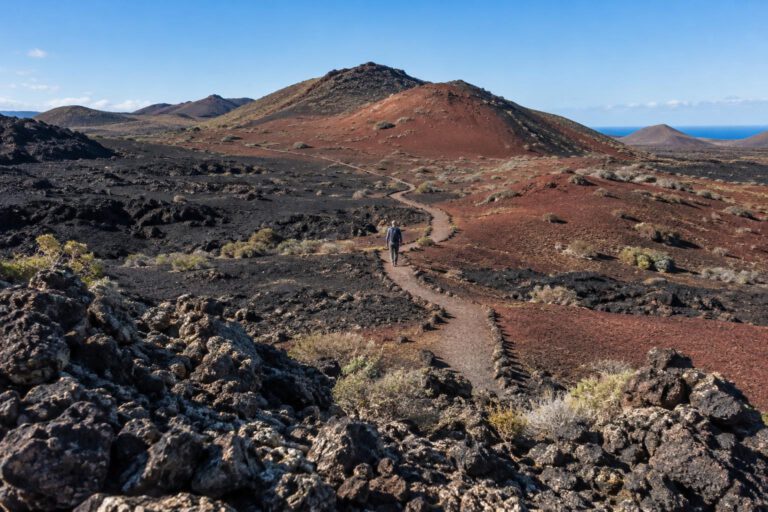
Teide National Park lists 41 official routes of varying lengths and difficulty levels. These include the Roques de García circular trail, rated easy, at 3.6 kilometres with a stated walking time of two hours, and the Arenas Negras trail, also rated easy: a six-kilometre, three-hour circular walk. These details come from the park’s official route overview. They are a guide to choosing a route, not a guarantee that a trail will be open on a particular day or suitable for everyone.
The park rules also apply to seemingly easier alternatives: stay on marked trails, take your rubbish away with you and do not remove plants or stones. Before setting off, it is worth checking the latest park notices and whether access is actually possible. The official information lists road and bus access; journey times and return connections should be checked before departure.
Plan your mountain day separately
The new quotas do not make Teide inaccessible. They do, however, mean that a day in the mountains needs to be treated as a separate part of the itinerary well in advance: choose a suitable route, sort out your reservation, pack all the required equipment and check the weather and access status again. Anyone staying on the coast in winter can still experience the island as a combination of mild everyday life by the sea and volcanic landscapes – provided the clothing in their rucksack is chosen for the mountain, not the beach.
Original reviewed by the editors · 18 November 2026