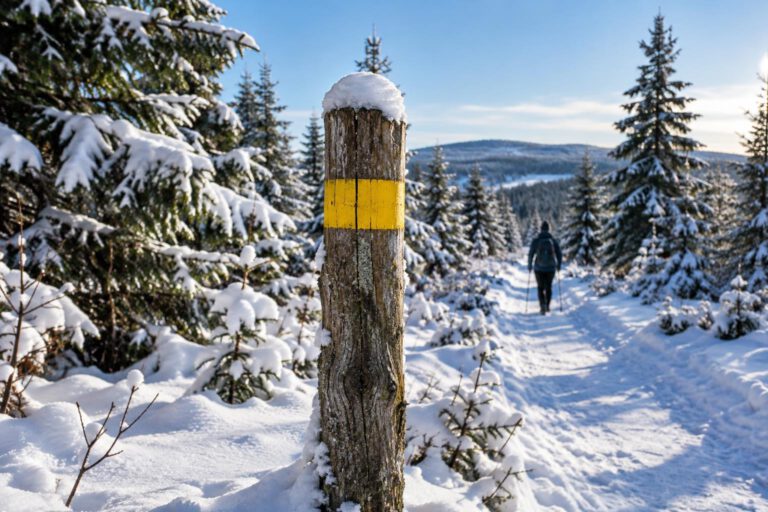
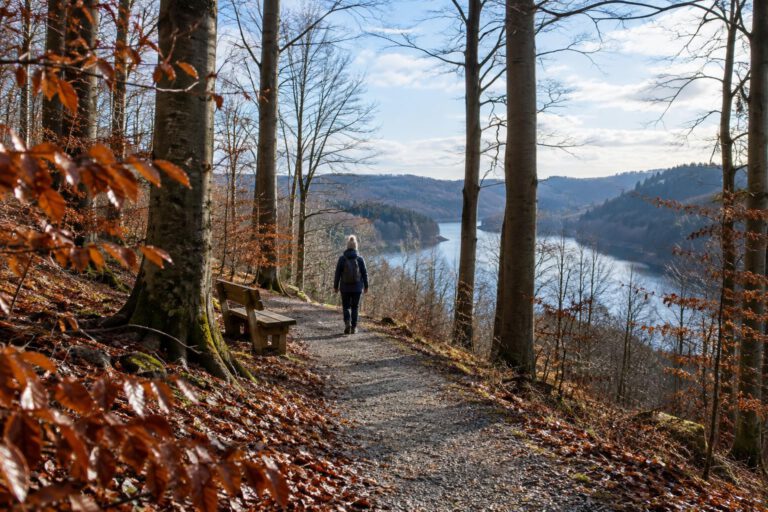
In winter, a walk begins with a look at a map of the area. Which paths are waymarked and open? Are there any closures or special rules for protected areas? Checking these points before setting off helps you steer clear of sensitive wildlife refuges and avoid surprises on icy or deeply snow-covered paths.
Wild animals often find less food during the colder months. If disturbed, they have to flee, using up extra energy. The German Hiking Association therefore advises staying on paths, avoiding noise and giving animals room to retreat if you encounter them.
1. Check the area and route first
Start with the map provided by the relevant tourism organisation, nature park or protected area authority. Check whether the path is open in winter and whether there are any notices about closures, diversions or seasonal restrictions. A line on a map alone does not always tell you whether a route is currently passable: snowfall, ice and a lack of winter maintenance change conditions.
Read the signs at the starting point and along the way, too. They may set out local rules that do not apply elsewhere. In the core zone of the Bavarian Forest National Park, for example, staying on paths is compulsory; there, you must not leave waymarked paths during the colder months. This is a specific rule of this national park, not a blanket requirement for all walking areas.
2. Follow the rules of the protected area you are visiting
In nature reserves and other protected areas, local notices take priority. Stay on designated paths, do not go around barriers and do not take cross-country detours. Even quiet, seemingly untouched areas can be important refuges for animals. Noise and loud music carry a long way; keep conversations quiet and leave plants and natural materials where they are.
The organisation Nationale Naturlandschaften recommends staying on paths in protected areas and following the information provided about local features. Where signs require you to stay on paths or indicate a seasonal closure, plan your walk accordingly – even if a digital map shows a different route.
3. Keep your dog on a short lead and encounters calm
Dogs should be kept on a lead in protected areas, as recommended by Nationale Naturlandschaften. Check local regulations too: stricter rules may apply depending on the area. A lead keeps your dog close to the path and makes it harder for it to chase wildlife. Do not let it run towards animals or into their refuges.
If wildlife appears, stay calm, keep your distance and leave the animal a clear escape route. Do not approach it for a photograph or follow it. If you have a dog, keep it on a short lead and move away in a controlled manner without cornering the animal. Pay particular attention to advice from the protected area authority about specific species or types of encounter.
4. Plan for weather, daylight and equipment
Check the weather forecast before setting off and adapt your walk to the conditions and your own experience. It gets dark early in winter; plan to be back before nightfall. In icy conditions, strong winds, fog or fresh snow, a shorter route or a different destination may be the better choice. Waymarked paths are not necessarily cleared or gritted.
Choose footwear with good grip and wear warm clothing in layers. Depending on the walk and conditions, your rucksack should contain a map – digital or on paper – a charged mobile phone, water, an extra warm layer and a torch. Do not rely solely on a phone battery for navigation.
At a glance
Check the area map and up-to-date information, follow local rules and stay on waymarked paths. Keep your dog on a lead in protected areas; do not crowd wildlife, but give animals space and an escape route. Weather, daylight hours and path conditions all help determine whether your planned walk is suitable today.
Original reviewed by the editors · 18 November 2026