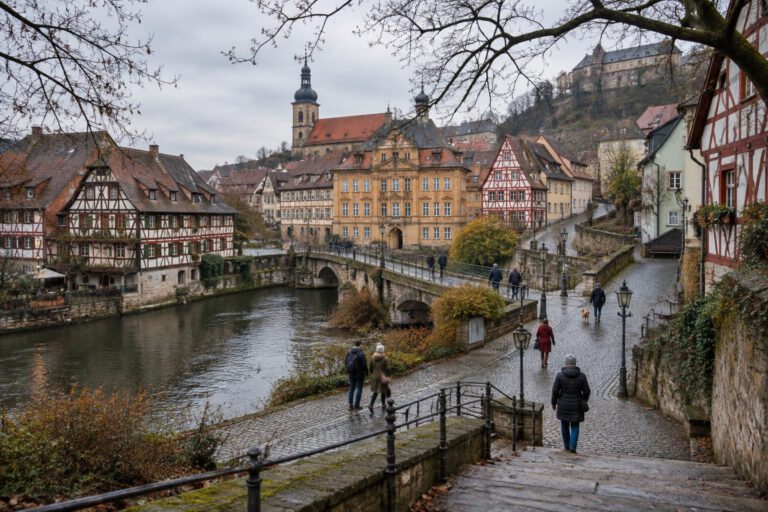
A green label at your accommodation or the word “sustainable” in a region’s marketing does not yet explain how tourism affects the climate, nature and everyday life. Verifiable information is more revealing: how do visitors arrive and get around locally? What environmental targets are in place, and is progress measured? How do residents experience tourism?
These questions are prompted by the 2026/27 National Sustainable Tourism Destinations Competition. The German Tourism Association (DTV) launched it on 2 October; tourism organisations from German towns, cities and regions can apply until 20 November 2026. The deadline makes the competition a timely subject for investigation – but success in a competition would not, on its own, provide comprehensive evidence of a region’s sustainability performance.
From promises to measurement
Sustainable tourism aims to limit environmental pressures, retain economic benefits within the region and take social interests into account. That means more than an environmental label: a destination encompasses many municipalities and businesses, varied landscapes and transport services. Progress therefore cannot be captured in a single figure.
To this end, the DTV has compiled nine indicators as a common basis for measurement. They include greenhouse gas emissions from travel to and from the destination, acceptance of tourism, visitor satisfaction, seasonality, accessibility and tourism’s share of total value added. The indicators are intended to make monitoring and comparison easier. Additional indicators can reflect regional characteristics.
For travellers, a figure only becomes useful when it is clear exactly what was measured: for which municipalities, over what period and using which method? A figure without a baseline or target offers little indication of whether things are improving. Published time series, specific targets and an explanation of who collects the data are useful. Certification can also offer pointers; what matters is which criteria are assessed and whether the results are accessible.
Getting around does not end at the station
The journey to a destination shapes its carbon footprint, but journeys during the stay also count. The German Environment Agency identifies transport, accommodation and leisure activities as areas with environmental impacts. For a holiday without your own car, simply naming a railway station in the travel directions is therefore not enough: what matters is connections, service frequency and the reach of public transport, as well as the ability to access important places and activities.
Good evidence shows how many visitors arrive by which modes of transport and how they get around locally – in each case with the survey period and underlying data. This is not easy to record everywhere. The German Environment Agency highlights gaps in regional and national data on tourists’ choice of transport. Where reliable figures are missing, a region should acknowledge the gap rather than citing a bus route or a visitor travel pass as its sole evidence of mobility provision.
Consider environmental targets and quality of life together
Greenhouse gas emissions are important, but they are not the only yardstick. Tourism facilities and activities use land and resources; recreational use can put pressure on sensitive habitats. A verifiable report therefore makes clear what targets apply to energy, water, land use or nature conservation, who is responsible for implementing them and when results are reviewed.
Residents’ perspectives are also part of the picture. The DTV lists acceptance of tourism and quality of life as relevant indicators. However, a survey only reveals trends if it is conducted regularly and transparently. Open opportunities for participation are also helpful: are residents’ concerns documented? Do they lead to decisions or measures? Tourism can create income and jobs; indicators of regional value added help assess whether some of the benefits actually remain in the local area.
What the competition demonstrates
For the competition’s assessment, the DTV uses 33 criteria from its practical guide. An expert jury reviews the applications, selects finalists and visits the two highest-rated destinations in each category. The “Starters” and “Advanced” categories take account of different stages of development. The process can show how regions organise their work and which approaches they pursue. It is no substitute for a complete assessment of all applicants that remains comparable over time.
Anyone choosing a region can therefore look for three things: publicly accessible indicators with a timeframe and methodology, specific targets accompanied by progress reports, and transparent public participation. For transport, this includes services that are genuinely usable for the journeys you want to make. Where answers are missing, that is important information in itself: sustainability is then a promise whose progress has not yet been sufficiently substantiated.
Original reviewed by the editors · 13 November 2026