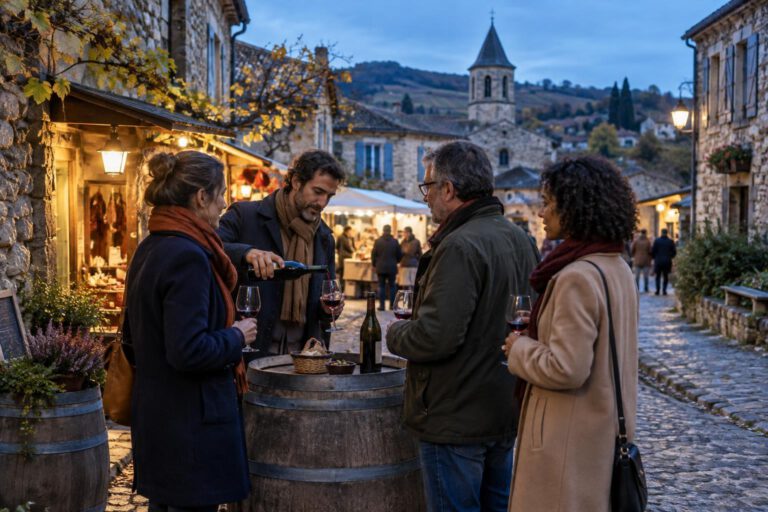
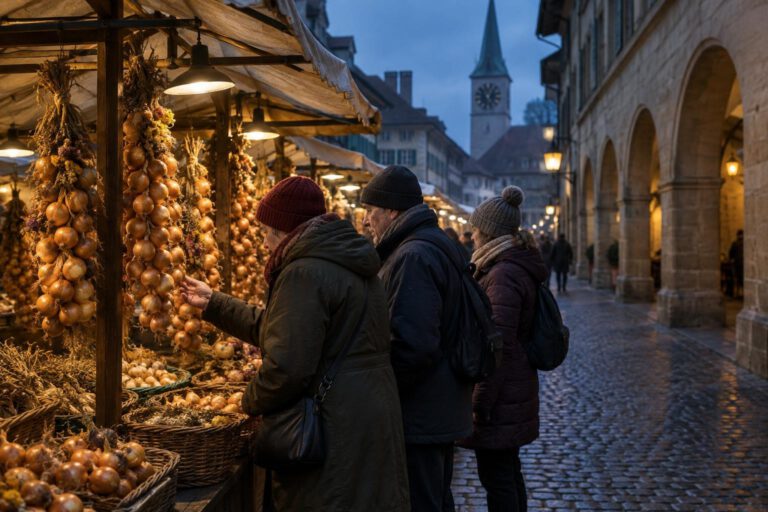
In November, Murten smells of market day: the truffle market is scheduled for the weekend of 14 and 15 November 2026. Fresh truffles and processed products are among the advertised offerings; wines from Vully are also set to play a part. The market thus raises a question that goes beyond the stalls: how much truffle is there in something that tastes of truffle?
The answer begins underground. Truffles are fungi whose fruiting bodies grow in the soil, so they cannot be seen and harvested like button mushrooms. For fresh produce, the precise species matters: the Zug Office for Consumer Protection states in its guidance that descriptions such as ‘white’ or ‘black truffle’ alone are not sufficient. The product designation should give the name of the fungus, such as summer truffle, or its Latin species name. Traceability and correct identification are also part of the trade in fresh truffles.
Truffles and flavouring are two different things
In the kitchen, fresh truffles can be finely shaved or incorporated into dishes. Their intense aroma comes from the actual fungus. Processed products, such as butter, sauce or cooking oil, may contain added flavouring as well as truffle. This is generally permitted, but it must be indicated in the ingredients list. For flavoured cooking oil, the product designation must also make clear that flavouring has been added.
The label helps distinguish between ingredients: ‘with truffles’ describes a truffle content, while ‘with truffle flavouring’ indicates an added flavouring. According to the Canton of Zug’s guidance, the indication of truffle content depends on the quantity in the finished product. The term ‘truffle oil’ is colloquial: truffles are not pressed to produce oil; rather, truffles or flavouring are added to cooking oil. Labelling requirements also apply to food sold loose. The Federal Food Safety and Veterinary Office points out that information must also be provided for unpackaged food.
The distinction matters when it comes to enjoyment. A flavoured product can have a strong aroma without containing much truffle. Anyone wanting to know whether real fungi or a flavouring have been used should read the ingredients list and ask about unpackaged goods. Labelling tells you which ingredients have been declared; it is no substitute for assessing quality or taste.
Wine from the other side of the lake
The market also invites a look across Lake Murten. Vineyards shape the landscape on the southern slopes of Mont Vully; the wine region extends across territory in Fribourg and Vaud. Switzerland Tourism describes Vully as an intercantonal AOC wine region. Its proximity is more than a pretty backdrop: truffle stalls and wine-growing point to two different forms of regional food and drink culture – a product whose origin and species must be precisely stated, and a wine region with a shared designation of origin.
There is no single wine pairing for truffles. The wine that works best changes with the dish and how it is prepared; a light truffle spread and a rich sauce do not call for the same thing. It makes sense to ask at the market about the specific wines and where they come from, rather than expecting a one-size-fits-all pairing. The advertised combination of truffles and Vully wines makes the market an opportunity to get to know both sides of the region: truffles in a jar or on a plate – and vines along the lakeshore.
For a visit, it is worth taking a close look at the labels on stalls and products. With fresh truffles, the species name and origin are crucial; with processed goods, it is the ingredients and any indication of added flavouring. This turns the promise of ‘truffle’ into more specific information about what is actually being sold.
Original reviewed by the editors · 11 November 2026