- The connection should work, the market should be open, the forest accessible and the sky dark. These are understandable wishes. In our articles this week, they encounter a world that moves at its own pace: animals need peace, cities have a history beyond their sights, and a short walk can open up more possibilities for a group of travellers than a long circuit.
For me, this leads to a clear proposition: good travel needs reliable access and a conscious acceptance that not everything can be available. The distinction is crucial. A well-timed rail connection expands freedom. Expecting to experience every place at any time can take it away from others.
A place has more than one leading role
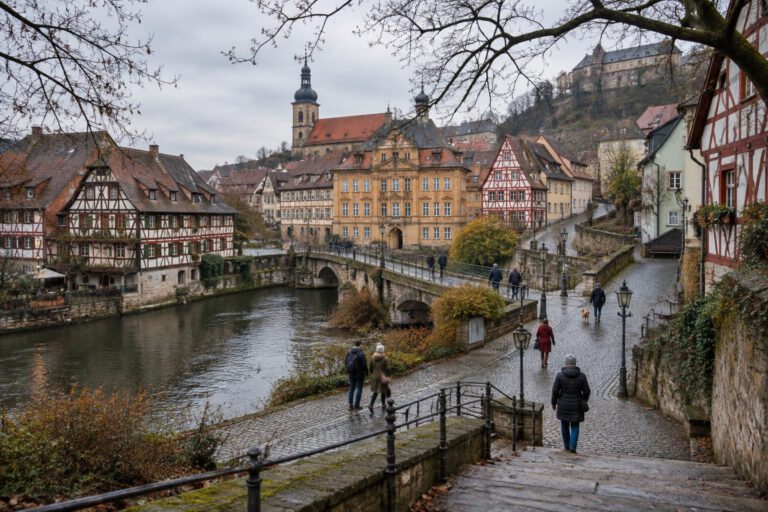
Our portrait of Bamberg describes a cityscape comprising the City on the Hills, the Island City and the Market Gardeners’ District. Its medieval layout and Baroque architecture belong together, as do the city and market gardening. Anyone who simply ticks off individual buildings misses the very connections that make this city legible.
This is also a question of attention. We can treat a place like a novel in which only the most famous sentences interest us. Or we can engage with its transitions: the relationship between living and working, the eras that continue to exist side by side. That does not require a longer holiday. It requires a decision not to fill an afternoon entirely with highlights.
I consider this free time an underrated part of travel planning. It leaves room for interests that emerge only along the way. An itinerary that has to justify every hour has little patience for that.
Access takes practical work
Now, it would be easy to turn such reflections into praise for travelling without a plan. Anyone with only a few days’ holiday, travelling with children or able to walk only limited distances needs reliable information. A missed connection may then mean half a day lost; imprecise directions can bring a shared outing to an end.
The article “La Gomera for different walking abilities: what short forest walks can offer” makes a constructive point here. Garajonay has trails of varying lengths and levels of difficulty. The short circuit deserves the same editorial attention as the demanding hike. Its value lies in whom it enables to experience nature.
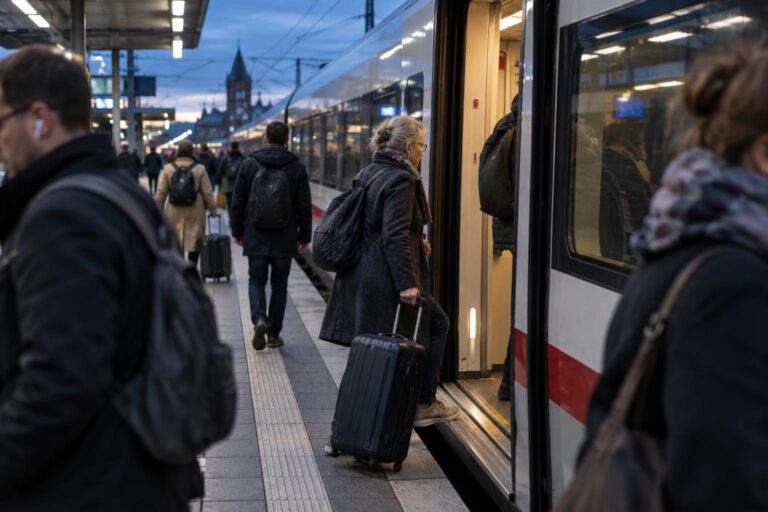
The recurring question of rail connections belongs here too. For me, freedom is measured by the choices that are genuinely available. How do we get there? Can everyone manage the route? Can we get back? Such questions are as much a part of a journey as the image of its destination.
Not every wish needs to be fulfilled
The strongest objection remains: people travel to experience something. They spend money, set aside time and are entitled to expect reliable services. Anyone offering a guided tour must organise it properly. Anyone promoting accessibility must provide specifics. Nature conservation must not be an excuse for poor information.
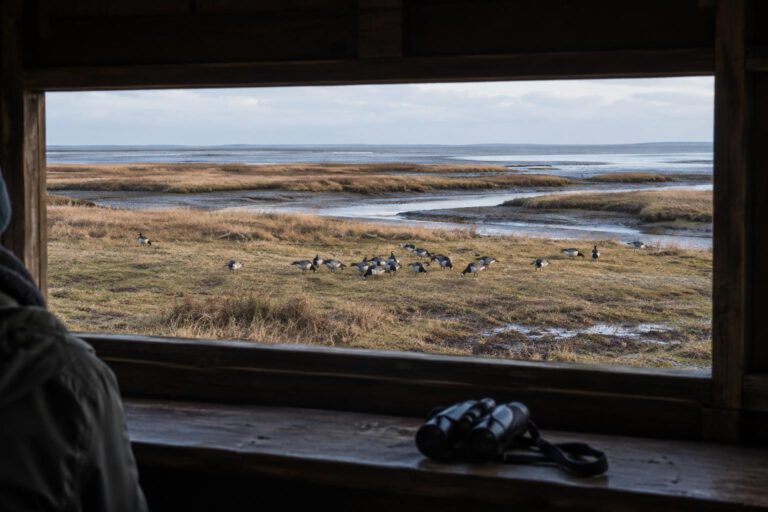
But that does not imply an entitlement to every experience. “The Eifel after sunset: how many visitors can the darkness accommodate?” takes us to this boundary. The national park authority stresses that sensitive animals need undisturbed nights; stargazing tours take place outside the national park. The very thing that attracts visitors therefore calls for restraint over where they go.
The same idea connects our questions about sustainability labels and digital travel suggestions: what matters is what works on the ground. A promise must be judged against ease of access, consideration for others and travellers’ needs.
I would like to see a form of tourism that organises access carefully while still giving a place room to breathe. Good planning can be precise about connections while leaving the experience open. The world becomes a better travel destination when it is allowed to keep its own rhythm.
Original reviewed by the editors · 13 November 2026