In autumn, Alba becomes a meeting place for people keen to discover what lies behind the white truffle’s reputation. The 96th Fiera Internazionale del Tartufo Bianco d’Alba runs from 10 October to 6 December 2026. Its truffle market in the Cortile della Maddalena opens at weekends. Among the sales stalls, regional foods and wines, there is a simple, useful question to ask: what can you actually tell from a fresh truffle — and what else must the seller disclose?
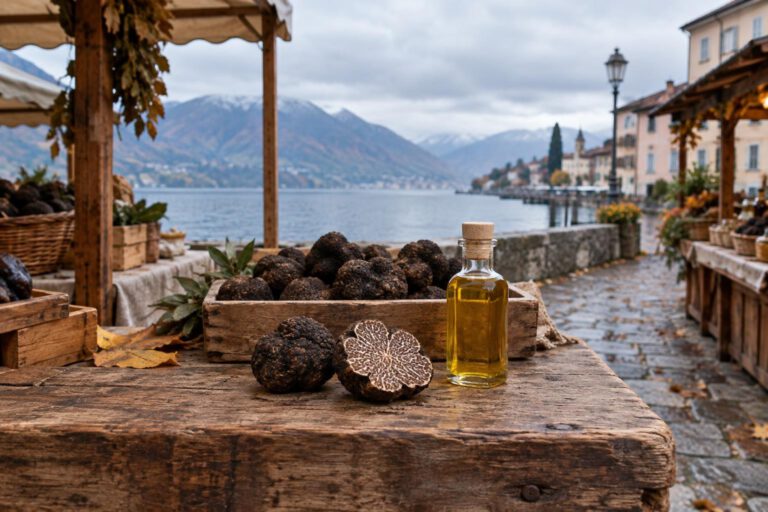
The white truffle at the heart of the fair is known scientifically as Tuber magnatum Pico. Its origin is part of its value, but the name Alba alone does not automatically tell you where an individual specimen was found. The truffle grows underground in association with tree roots; finding it depends on suitable soils and habitats. The fair thus also puts a landscape and a regional working tradition centre stage: the search by Trifolau, the truffle hunters, often accompanied by a specially trained dog.
Origin means more than a famous name
When buying fresh truffles, start by checking the labelling. Under the relevant Italian rules, fresh truffles must be offered separately by species and variety; goods on display must carry their Italian and Latin names, along with the geographical area where they were gathered. A well-known sales setting can offer guidance, but it is no substitute for this specific information. Interested buyers can ask where the truffles were gathered and whether they are being sold whole or in pieces.
With processed products, too, it is worth taking a close look at the ingredients. A jarred product, sauce or oil with a truffle flavour is not the same as a fresh truffle. Product descriptions and ingredient lists show what is inside; a prestigious name on the label alone says little about quantity, species or origin. For a direct comparison, the botanical name is therefore more useful than a general reference to “truffles”.
What your nose and hands can tell you
Sensory assessment relies on smell, appearance and feel. The fair’s organiser describes how a panel examines the truffles on sale; training sessions run by the Centro Nazionale Studi Tartufo introduce visitors to their aromas and characteristics through smell tests and assessment sheets. The assessment thus becomes a learning opportunity: you look for a clear, characteristic aroma, examine the surface and condition, and learn to describe your impressions more precisely.
This is not a promise that every truffle will appeal equally to everyone. Aroma and quality can be assessed through the senses; origin cannot be reliably determined in this way. A tasting or demonstration shares knowledge and brings the fair to life, but it is not an independent laboratory analysis. Buyers can therefore consider their sensory impressions alongside the information provided at the stall.
Fair, market and moderation
The Alba fair separates these aspects, at least in its programme: there is the World Market for browsing and buying, alongside dedicated sensory analysis sessions. This is useful for travellers who want not only to taste an expensive delicacy, but also to understand how it is traded. Participation requirements and dates for individual workshops may change; check opening times and the programme before visiting.
The white truffle remains a scarce seasonal product and a luxury food. A small purchase or a dish with freshly shaved truffle can therefore be just as worthwhile as a visit without buying anything. By focusing on declarations of origin, botanical names and your own sense of smell, you can take away something more lasting from Alba than a promise of prestige: a clearer understanding of how a natural product, regional identity and the market come together.
Original reviewed by the editors · 14 November 2026