Évora is a city of short distances: from Praça do Giraldo, lanes lead to Roman ruins, churches and quieter squares, while the cathedral towers rise above the rooftops. The historic centre is compact enough for a day on foot. Those visiting in winter can experience the city ahead of its Capital of Culture year in 2027 – and take time to explore the layers that have shaped Évora.
UNESCO added the historic centre to its World Heritage List in 1986. Its significance lies not only in individual monuments: the cityscape combines Roman remains, medieval buildings and low, whitewashed houses from later centuries. UNESCO also highlights how Portuguese architecture from Évora influenced buildings in Brazil. In the 15th century, the city became a residence of Portuguese kings; in the 16th century, a university was founded here, making Évora an important intellectual centre.
Between square and temple
Praça do Giraldo is a good starting point. Arcades, cafés and shops line the central square; from there, narrow streets lead to the Sé (cathedral), the Roman temple and the Igreja de São Francisco with its Capela dos Ossos (Chapel of Bones). The proximity of these places makes Évora appealing to travellers who prefer exploring on foot to driving between sights. Whitewash, tiles and wrought-iron balconies alternate along the façades. Away from the well-known buildings, too, the dense street pattern tells the story of a city whose historic core continued to develop over the centuries.
The surrounding countryside is also part of the city’s story: Évora is the historic capital of the Alentejo, a region known for expansive landscapes, gentle hills, vineyards and olive groves. Without a hire car, trips into the surrounding area require more planning; the old town itself offers enough for a focused stay. The European Capital of Culture 2027 aims to put Évora and the Alentejo at the heart of a year-long programme under the guiding theme of “VAGAR”. Those visiting beforehand will find the World Heritage Site in its familiar urban form, before the cultural year begins.
The station and accessibility
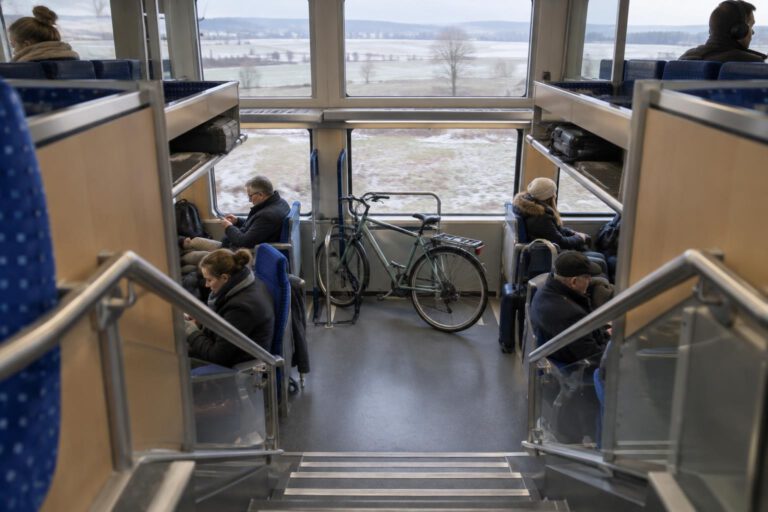
According to Turismo de Portugal, the railway station is around 1.5 kilometres from the historic centre. Portuguese railway operator CP lists Évora in its timetable with services from Lisboa Oriente; the published times have been in effect since 6 September 2026. Timetables can change, so check the service with the operator before departure. According to the tourist accessibility guide, the route from the station towards the centre follows wide pavements and dropped kerbs at crossings.
This route also makes clear that “accessible” does not mean the same thing for every route and sight. Turismo de Portugal describes many streets as having gentle gradients and notes wide pedestrian areas in the centre. At the same time, the organisation points out individual barriers, a lack of continuous tactile guidance and only occasional audible signals at crossings. Steps and uneven surfaces make access to the cathedral difficult; the Chapel of Bones also has a step. The description offers guidance, not a guarantee of the current situation at every entrance.
At a glance
- Best time to visit: The sources checked do not establish a specific best time to visit.
- Getting there: CP connects Lisboa Oriente with Évora by train; according to Turismo de Portugal, the station is around 1.5 kilometres from the historic centre. Check the timetable before travelling.
- Highlights: Praça do Giraldo, Sé, Roman temple, Igreja de São Francisco and Capela dos Ossos.
- Tip for a day: Explore the old town on foot from Praça do Giraldo, allowing time for the squares and lanes between the main sights.
- Turismo de Portugal.
Original reviewed by the editors · 11 November 2026