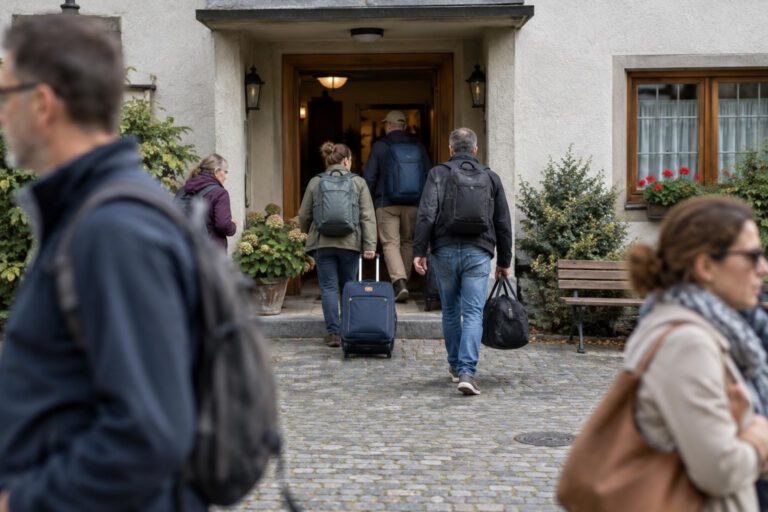
A place’s beauty is not a promise it has made to us. Venice owes us neither an empty bridge nor a flat for the weekend. A beach is no more obliged to satisfy our longing than a mountain summit is. Yet the tourist’s gaze can easily carry a sense of ownership: whatever moves us, we want to reach, capture and enjoy with as little disturbance as possible.
I believe this sense of entitlement is the fundamental mistake we make when travelling. The world does not lose its value when it sets limits on our wishes. Perhaps discovering it begins precisely where we allow it to belong to others too.
Even Goethe arrived with an image in mind
When Goethe reached Venice on 28 September 1786, a gondola reminded him of a model his father had owned. In his “Italian Journey”, the city thus first encounters an idea from childhood. It is a revealing moment: even this famous venture into the unknown came with images in its luggage.
There is nothing wrong with that. Literature, paintings and photographs can sharpen our attention. It becomes problematic when the image we bring becomes the standard the real place must meet. Then delivery traffic spoils the alleyway, building work the square, everyday life the view. The very life that has shaped a place comes to seem an obstacle to contemplating it.
Venice and its lagoon have been on the UNESCO World Heritage List since 1987. UNESCO’s assessment also notes that homes are becoming visitor accommodation and services for residents are giving way to tourist offerings. This affects the city’s cultural and social integrity. Anyone who wants to preserve its façades must therefore also ask what kind of life remains possible behind them.
The legitimate wish for ease
The strongest objection to such thoughts deserves respect: holidays are precious. Those who work, care for relatives and save for a long time to travel want rest, not another test of conscience. Tourism also generates income. The International Labour Organization describes it as a significant driver of employment, particularly for local communities.
A wholesale withdrawal of visitors is therefore not a convincing answer. Nor am I convinced by the romantic demand that only slow, lengthy and expensive travel is decent. It quickly turns responsibility into a privilege for those with time and money.
But pointing to jobs does not end the debate either. The ILO identifies low wages and long working hours as problems in the sector. What also matters, then, is the conditions under which people make our holidays possible. A well-booked hotel tells us little about that.
Freedom needs a fair framework
Responsibility cannot be left entirely at the booking screen. Policymakers and businesses must create conditions that put the less harmful choice within reach. In its comparison of modes of transport published in 2021, the European Environment Agency found that flying had a significantly greater emissions impact per passenger-kilometre than rail travel. To me, this also places an obligation on transport planning and provision, rather than merely issuing an appeal to travellers.
I want tourism to measure its success by whether places remain liveable, work is properly paid and landscapes are allowed to have limits to what they can bear. That includes decisions visitors may dislike. A protected area is entitled to close off sections; a city should be able to defend housing against its exploitation for tourism.
We do not have to give up the joy of travel to achieve this. Admiration can become more attentive: it can see beauty while recognising that others live their everyday lives there. The shadows are part of the world we want to discover. Noticing them does not diminish its beauty. It changes our claim to it.
Original reviewed by the editors · 15 November 2026